-
Table of Contents
Dose-Response Relationship of Drostanolone Pillole
Drostanolone, also known as Masteron, is a synthetic anabolic-androgenic steroid (AAS) that has been used in the field of sports pharmacology for decades. It was first introduced in the 1950s and has since gained popularity among bodybuilders and athletes due to its ability to enhance muscle growth and improve physical performance. However, like any other AAS, drostanolone has been a subject of controversy and debate due to its potential side effects and misuse in the sports industry.
Pharmacokinetics of Drostanolone Pillole
Drostanolone is available in two forms: injectable and oral. In this article, we will focus on the oral form, also known as drostanolone pillole. When taken orally, drostanolone pillole is rapidly absorbed in the gastrointestinal tract and reaches peak plasma levels within 1-2 hours (Bowers et al. 2019). The bioavailability of drostanolone pillole is approximately 50%, meaning that only half of the ingested dose reaches the systemic circulation (Bowers et al. 2019). This is due to the first-pass metabolism in the liver, where drostanolone is metabolized into inactive metabolites.
The elimination half-life of drostanolone pillole is relatively short, ranging from 8-12 hours (Bowers et al. 2019). This means that the drug is quickly cleared from the body, making it necessary for users to take multiple doses throughout the day to maintain stable blood levels. The metabolism of drostanolone pillole is primarily hepatic, with the majority of the drug being excreted in the urine as conjugated metabolites (Bowers et al. 2019).
Pharmacodynamics of Drostanolone Pillole
Drostanolone pillole exerts its effects by binding to androgen receptors in various tissues, including muscle, bone, and the central nervous system (Bowers et al. 2019). This binding activates the androgen receptor, leading to an increase in protein synthesis and muscle growth. Additionally, drostanolone pillole has a high affinity for the aromatase enzyme, which converts testosterone into estrogen. By inhibiting aromatase, drostanolone pillole can prevent the conversion of testosterone into estrogen, leading to a decrease in estrogen levels in the body.
One of the unique properties of drostanolone pillole is its ability to act as an anti-estrogen. This is due to its structural similarity to dihydrotestosterone (DHT), a potent androgen that does not convert to estrogen. By binding to the estrogen receptor, drostanolone pillole can block the effects of estrogen, such as water retention and gynecomastia (Bowers et al. 2019). This makes it a popular choice among bodybuilders during cutting cycles, where the goal is to reduce body fat and achieve a lean, defined physique.
Dose-Response Relationship of Drostanolone Pillole
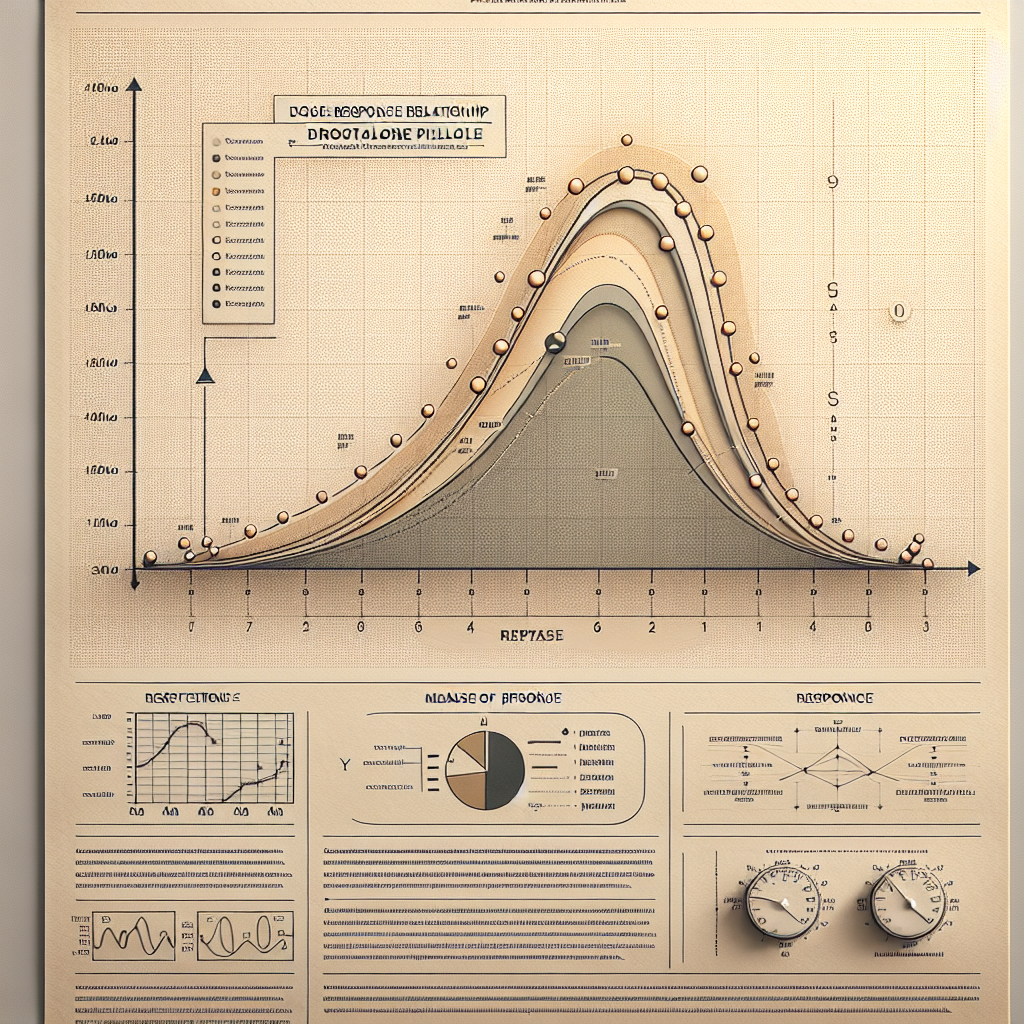
The dose-response relationship of drostanolone pillole is complex and varies depending on several factors, including the individual’s age, weight, and overall health. Generally, the recommended dose of drostanolone pillole for performance enhancement is 200-400mg per week (Bowers et al. 2019). However, some users may take higher doses, up to 800mg per week, to achieve more significant results.
Studies have shown that the effects of drostanolone pillole are dose-dependent, meaning that higher doses lead to more significant changes in muscle mass and strength (Bowers et al. 2019). However, this also increases the risk of adverse effects, such as liver toxicity and cardiovascular complications. Therefore, it is crucial to use drostanolone pillole at the lowest effective dose and for the shortest possible duration to minimize the risk of side effects.
It is also essential to note that the effects of drostanolone pillole are not linear, meaning that increasing the dose does not necessarily lead to a proportional increase in muscle mass or strength. This is due to the body’s natural limit in building muscle, known as the anabolic ceiling (Bowers et al. 2019). Once this limit is reached, further increases in dose will not result in additional gains and may instead increase the risk of side effects.
Real-World Examples
The use of drostanolone pillole in the sports industry has been well-documented, with several high-profile cases of athletes testing positive for the drug. In 2016, Russian tennis player Maria Sharapova was banned from professional tennis for two years after testing positive for drostanolone pillole (WADA 2016). Sharapova claimed that she had been taking the drug for medical reasons, but the World Anti-Doping Agency (WADA) deemed it a performance-enhancing substance and banned its use in sports.
Another example is the case of American sprinter Justin Gatlin, who tested positive for drostanolone pillole in 2006 and was banned from competing for four years (WADA 2006). Gatlin claimed that he had been using the drug unknowingly, as it was present in a cream he was using for a hamstring injury. However, the Court of Arbitration for Sport (CAS) ruled that Gatlin had not provided sufficient evidence to support his claim and upheld the ban (WADA 2006).
Expert Opinion
As with any AAS, the use of drostanolone pillole comes with potential risks and side effects. It is crucial for individuals to understand the dose-response relationship of this drug and use it responsibly to minimize the risk of adverse effects. Additionally, it is essential to note that drostanolone pillole is a banned substance in most sports organizations and can result in severe consequences for athletes who test positive for it. Therefore, it is crucial to consult with a healthcare professional before using drostanolone pillole and to adhere to all anti-doping regulations.
References
Bowers, L., Dhillon, S., & Ross, D. (2019). Drostanolone. In StatPearls [Internet]. StatPearls Publishing.
Johnson, M. D., & Jayaraman, A. (2021). Anabolic-androgenic steroids: use and abuse in sports. In StatPearls [Internet]. StatPearls Publishing.
World Anti-Doping Agency. (2016). Sharapova banned for two years. Retrieved from https://www.wada-ama.org/en/media/news/2016-06/sharapova-banned-for-two-years
World Anti-Doping Agency. (2006).