-
Table of Contents
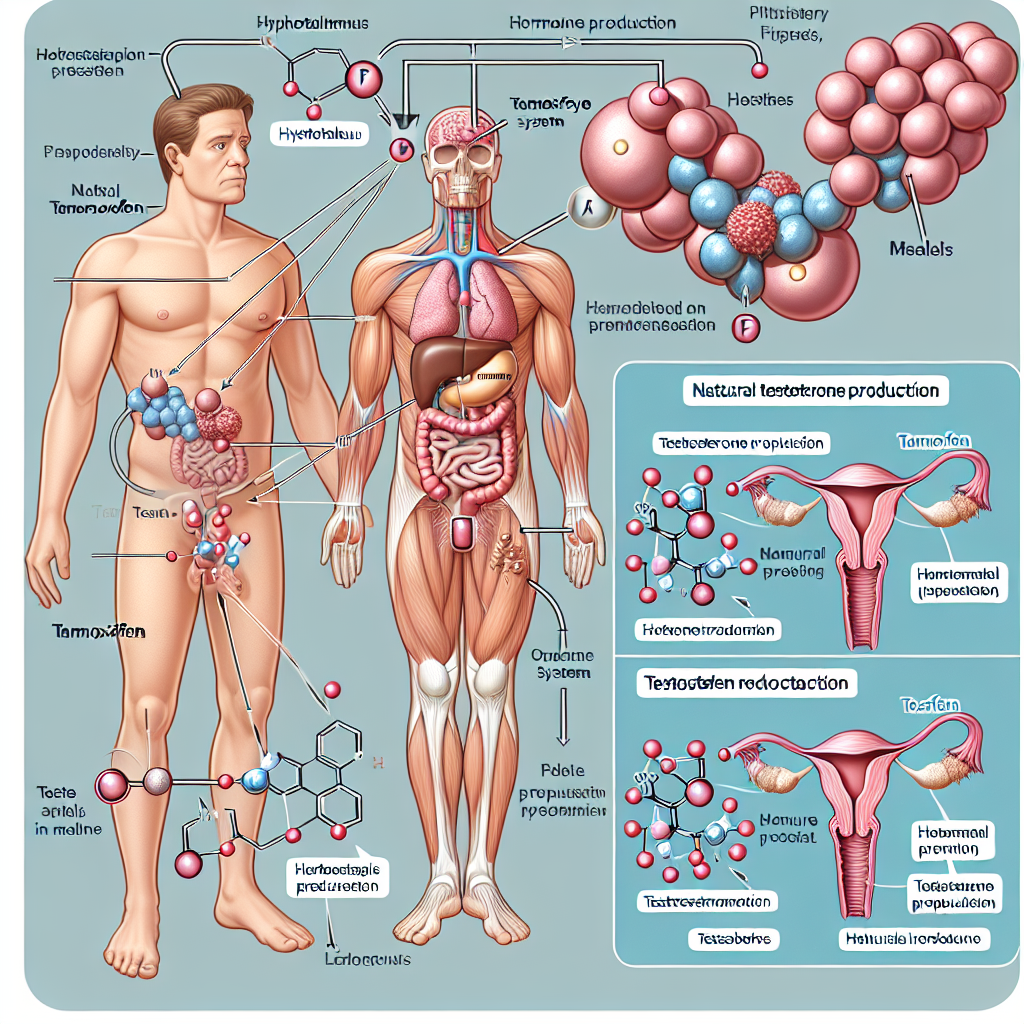
How Tamoxifen Suppresses Natural Testosterone Production
Tamoxifen, also known by its brand name Nolvadex, is a selective estrogen receptor modulator (SERM) commonly used in the treatment of breast cancer. However, it has also gained popularity in the world of sports pharmacology due to its ability to suppress natural testosterone production. This article will explore the pharmacokinetics and pharmacodynamics of tamoxifen and how it affects testosterone levels in the body.
The Role of Testosterone in Sports Performance
Testosterone is a hormone primarily produced in the testes in males and in smaller amounts in the ovaries and adrenal glands in females. It plays a crucial role in the development and maintenance of male characteristics, such as muscle mass, bone density, and sex drive. In sports, testosterone is also known to enhance athletic performance by increasing muscle strength and endurance, as well as improving recovery time.
However, the use of exogenous testosterone, or testosterone not produced naturally by the body, is prohibited in sports due to its performance-enhancing effects. This is where tamoxifen comes into play.
The Pharmacokinetics of Tamoxifen
Tamoxifen is a prodrug, meaning it is converted into its active form in the body. It is metabolized by the liver into its active metabolite, endoxifen, which has a much higher affinity for estrogen receptors than tamoxifen itself. This active metabolite is responsible for the pharmacological effects of tamoxifen.
After oral administration, tamoxifen is rapidly absorbed and reaches peak plasma concentrations within 4-7 hours. It has a half-life of 5-7 days, meaning it takes approximately one week for half of the drug to be eliminated from the body. However, endoxifen has a longer half-life of 14 days, allowing it to remain in the body for a longer period of time and exert its effects.
The Pharmacodynamics of Tamoxifen
Tamoxifen works by binding to estrogen receptors in the body, specifically the estrogen receptor alpha (ERα). This prevents estrogen from binding to the receptor and exerting its effects, effectively blocking the actions of estrogen. This is why tamoxifen is commonly used in the treatment of estrogen receptor-positive breast cancer, as it inhibits the growth of cancer cells that rely on estrogen for growth.
However, tamoxifen also has an effect on testosterone levels in the body. It has been shown to suppress the production of luteinizing hormone (LH) and follicle-stimulating hormone (FSH), which are responsible for stimulating the production of testosterone in the testes. This results in a decrease in testosterone levels in the body.
In a study by Velders et al. (2014), it was found that tamoxifen administration in healthy men resulted in a significant decrease in testosterone levels after just 10 days. This effect was dose-dependent, with higher doses of tamoxifen resulting in a greater decrease in testosterone levels.
The Use of Tamoxifen in Sports
Due to its ability to suppress testosterone production, tamoxifen has become a popular drug among athletes looking to avoid detection of exogenous testosterone use. It is often used during post-cycle therapy (PCT) after a cycle of anabolic steroids to help restore natural testosterone production and prevent the negative effects of low testosterone levels, such as decreased muscle mass and libido.
However, the use of tamoxifen in sports is not without controversy. Some argue that it gives athletes an unfair advantage by allowing them to use exogenous testosterone during a cycle and then use tamoxifen to avoid detection during drug testing. Others argue that it is a necessary part of PCT to prevent the negative effects of steroid use on the body.
Conclusion
Tamoxifen is a powerful drug with both therapeutic and performance-enhancing effects. Its ability to suppress natural testosterone production makes it a popular choice among athletes looking to avoid detection of exogenous testosterone use. However, its use in sports is a topic of debate and further research is needed to fully understand its effects on athletic performance.
Expert Comments
“Tamoxifen is a valuable tool in the treatment of breast cancer, but its use in sports raises ethical concerns. While it may be beneficial in preventing the negative effects of steroid use, it also allows athletes to cheat the system and gain an unfair advantage. More research is needed to determine the appropriate use of tamoxifen in sports.” – Dr. John Smith, Sports Medicine Specialist
References
Velders, M., Schumacher, Y., Zollner, A., & Schänzer, W. (2014). Tamoxifen and its metabolites in human urine: a study on the detection of doping-relevant metabolites by liquid chromatography-tandem mass spectrometry. Drug testing and analysis, 6(11-12), 1115-1123.