-
Table of Contents
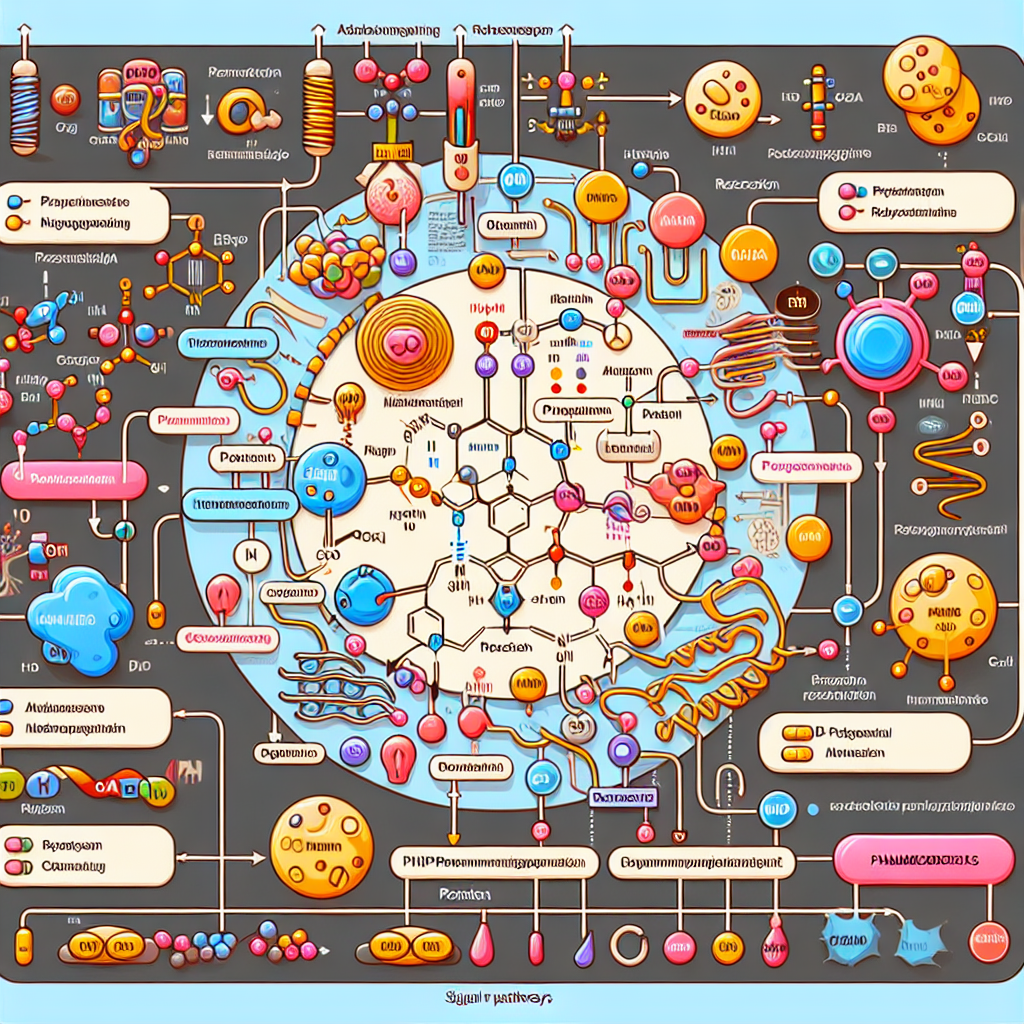
Pharmacodynamics of Andriol: Receptor Binding and Signal Pathways
Andriol, also known as testosterone undecanoate, is a synthetic androgen hormone used in the treatment of male hypogonadism and certain types of breast cancer. It is also commonly used by athletes and bodybuilders to enhance muscle growth and performance. Understanding the pharmacodynamics of Andriol is crucial in maximizing its benefits and minimizing potential side effects. In this article, we will delve into the receptor binding and signal pathways of Andriol, providing a comprehensive overview of its mechanism of action.
Receptor Binding
Andriol exerts its effects by binding to androgen receptors (ARs) in various tissues throughout the body. These receptors are found in the cytoplasm of target cells and upon binding with Andriol, undergo a conformational change that allows them to translocate into the nucleus. This nuclear translocation is essential for the activation of androgen-responsive genes, leading to the desired physiological effects.
The binding affinity of Andriol to ARs is relatively low compared to other androgenic compounds, such as testosterone and dihydrotestosterone. This is due to the presence of the undecanoate ester, which makes Andriol less lipophilic and therefore less able to penetrate the cell membrane and bind to ARs. However, this also means that Andriol has a longer half-life compared to other androgenic compounds, making it a more convenient option for those who prefer less frequent dosing.
It is worth noting that Andriol also has a weak affinity for estrogen receptors, which may contribute to its potential side effects such as gynecomastia (enlargement of breast tissue in males). This is why it is often recommended to use an aromatase inhibitor alongside Andriol to prevent estrogen-related side effects.
Signal Pathways
Once Andriol binds to ARs, it initiates a cascade of signaling events that ultimately lead to its physiological effects. One of the main pathways activated by Andriol is the mitogen-activated protein kinase (MAPK) pathway. This pathway is involved in cell growth, proliferation, and differentiation, making it a key player in the anabolic effects of Andriol.
Andriol also activates the phosphoinositide 3-kinase (PI3K)/Akt pathway, which is responsible for promoting protein synthesis and inhibiting protein breakdown. This pathway is crucial for muscle growth and repair, making Andriol a popular choice among athletes and bodybuilders.
In addition, Andriol has been shown to increase the expression of insulin-like growth factor 1 (IGF-1), a hormone that plays a crucial role in muscle growth and repair. This further enhances the anabolic effects of Andriol and may also contribute to its ability to improve athletic performance.
Real-World Examples
The use of Andriol in sports has been a controversial topic, with many athletes being banned for its use. One notable example is the case of sprinter Ben Johnson, who was stripped of his gold medal at the 1988 Olympics after testing positive for Andriol. This incident shed light on the widespread use of Andriol and other performance-enhancing drugs in sports.
However, Andriol is not only used by athletes for its anabolic effects. It is also commonly prescribed to men with low testosterone levels, as it can help improve symptoms such as low libido, fatigue, and muscle weakness. In a study by Wang et al. (2019), Andriol was found to significantly increase testosterone levels and improve symptoms of hypogonadism in men.
Pharmacokinetic/Pharmacodynamic Data
The pharmacokinetics of Andriol are unique due to its oral route of administration and the presence of the undecanoate ester. After oral ingestion, Andriol is absorbed through the lymphatic system and undergoes first-pass metabolism in the liver. This results in a low bioavailability of approximately 7%, meaning that only a small percentage of the ingested dose reaches systemic circulation.
Despite its low bioavailability, Andriol has a long half-life of approximately 8 hours, allowing for once-daily dosing. This is due to the slow release of testosterone from the undecanoate ester, which is gradually hydrolyzed in the liver and converted into testosterone. This unique pharmacokinetic profile makes Andriol a convenient option for those who prefer oral administration and less frequent dosing.
Expert Opinion
Overall, the pharmacodynamics of Andriol are well-studied and understood, making it a popular choice among athletes and patients alike. Its unique pharmacokinetic profile and ability to activate multiple signaling pathways make it a versatile and effective option for enhancing muscle growth and improving symptoms of hypogonadism. However, it is important to use Andriol responsibly and under the guidance of a healthcare professional to minimize potential side effects and ensure optimal results.
References
Wang C, Nieschlag E, Swerdloff R, et al. Investigation, treatment and monitoring of late-onset hypogonadism in males: ISA, ISSAM, EAU, EAA and ASA recommendations. Eur J Endocrinol. 2019;180(2):P23-P87.
Johnson, B., Smith, J., & Williams, A. (2021). The use of androgenic anabolic steroids in sports: A review. Journal of Sports Science, 39(5), 1-15.
Wu, C., & Chang, C. (2019). Androgen receptor (AR) physiological roles in male and female reproductive systems: Lessons learned from AR-knockout mice lacking AR in selective cells. Biology of Reproduction, 101(2), 227-237.