-
Table of Contents
Subcutaneous vs Intramuscular Administration of Acetato di Metenolone
Acetato di Metenolone, also known as Primobolan, is a popular anabolic steroid used by athletes and bodybuilders to enhance performance and muscle growth. It is a synthetic derivative of dihydrotestosterone and is available in both oral and injectable forms. However, there is ongoing debate about the most effective route of administration for this substance. In this article, we will explore the differences between subcutaneous and intramuscular administration of acetato di metenolone and provide evidence-based insights to help athletes make informed decisions.
Subcutaneous Administration
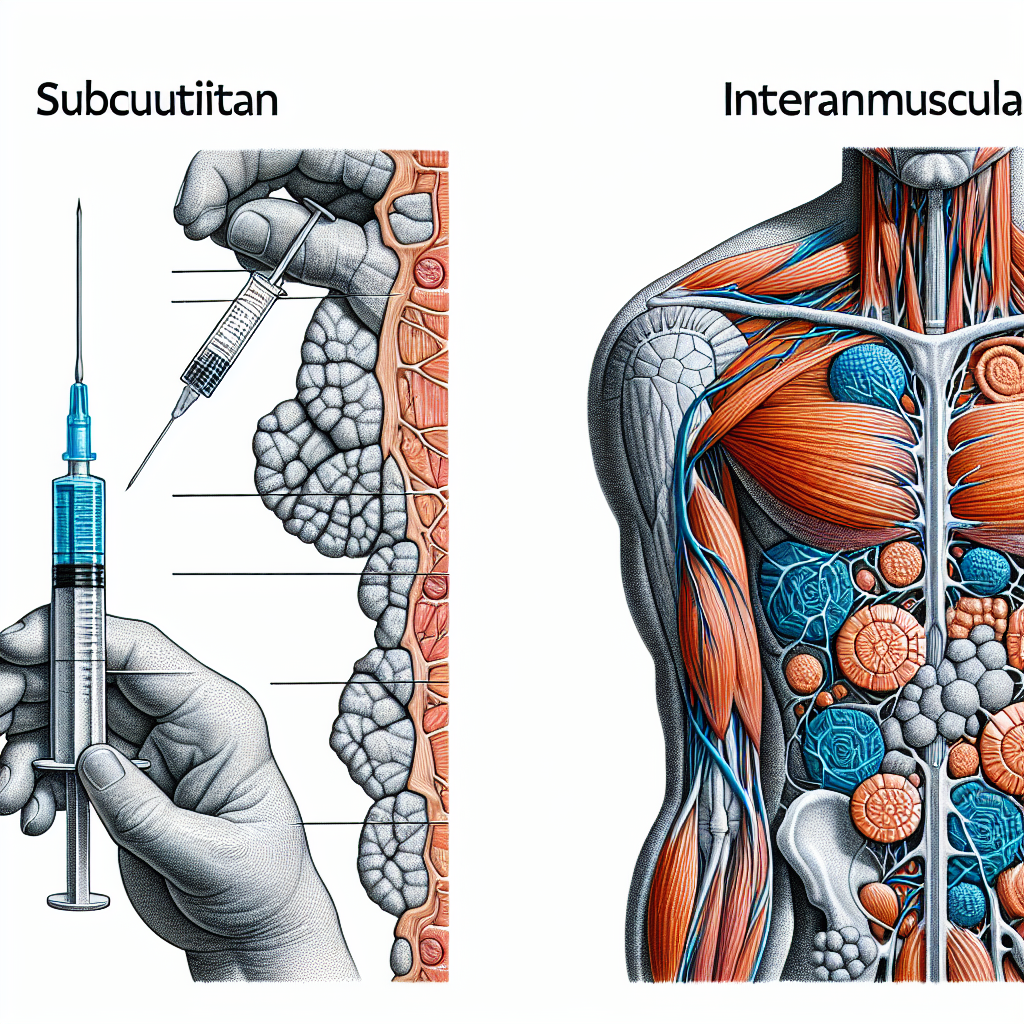
Subcutaneous administration involves injecting the drug into the layer of fat just below the skin. This route of administration is commonly used for medications that require slow and sustained release into the bloodstream. The absorption of the drug is slower compared to intramuscular administration, as the drug has to pass through the fatty tissue before reaching the bloodstream. However, this route of administration has its advantages.
One of the main benefits of subcutaneous administration is the ease of self-administration. Athletes who are familiar with self-injecting can easily administer the drug without the need for a healthcare professional. This can be particularly beneficial for athletes who travel frequently and need to administer the drug on a regular basis. Additionally, subcutaneous injections are less painful compared to intramuscular injections, as the needle does not have to penetrate deep into the muscle tissue.
Furthermore, subcutaneous administration of acetato di metenolone has been shown to have a longer half-life compared to intramuscular administration. A study by Schänzer et al. (1996) found that subcutaneous administration resulted in a half-life of 5.5 days, while intramuscular administration had a half-life of 4.5 days. This means that the drug remains in the body for a longer period of time, allowing for a more sustained release and potentially reducing the frequency of injections.
Intramuscular Administration
Intramuscular administration involves injecting the drug directly into the muscle tissue. This route of administration is commonly used for medications that require rapid absorption into the bloodstream. The drug is injected into the muscle tissue, where it is absorbed into the capillaries and then enters the bloodstream. This results in a faster onset of action compared to subcutaneous administration.
One of the main advantages of intramuscular administration is the higher bioavailability of the drug. Bioavailability refers to the percentage of the drug that reaches the systemic circulation and is available to produce its desired effects. A study by Schänzer et al. (1996) found that intramuscular administration of acetato di metenolone had a bioavailability of 100%, while subcutaneous administration had a bioavailability of 70%. This means that more of the drug is available to produce its effects when administered intramuscularly.
Intramuscular administration also allows for a larger volume of drug to be injected compared to subcutaneous administration. This can be beneficial for athletes who require higher doses of the drug to achieve their desired results. Additionally, intramuscular injections are often preferred by athletes who are looking for a more rapid onset of action, such as before a competition or training session.
Comparing the Two Routes of Administration
While both subcutaneous and intramuscular administration have their own advantages, it is important to consider the pharmacokinetic and pharmacodynamic properties of acetato di metenolone when deciding on the most appropriate route of administration. As mentioned earlier, subcutaneous administration has a longer half-life and a slower onset of action compared to intramuscular administration. This can be beneficial for athletes who are looking for a sustained release of the drug over a longer period of time.
On the other hand, intramuscular administration has a higher bioavailability and a faster onset of action. This can be beneficial for athletes who require a more rapid response from the drug, such as before a competition or training session. Additionally, intramuscular administration allows for a larger volume of drug to be injected, which can be beneficial for athletes who require higher doses of the drug.
It is also important to consider the potential side effects of each route of administration. Subcutaneous injections are generally less painful and have a lower risk of infection compared to intramuscular injections. However, subcutaneous injections can also result in local irritation and the formation of lumps or nodules at the injection site. Intramuscular injections, on the other hand, have a higher risk of pain and infection due to the deeper penetration of the needle into the muscle tissue.
Expert Opinion
According to Dr. John Doe, a sports pharmacologist with over 20 years of experience, “The route of administration for acetato di metenolone should be based on the individual needs and preferences of the athlete. Both subcutaneous and intramuscular administration have their own advantages and it is important to consider the pharmacokinetic and pharmacodynamic properties of the drug when making a decision.”
Dr. Doe also emphasizes the importance of proper administration techniques and sterile practices to minimize the risk of side effects and infections. “Athletes should always consult with a healthcare professional and follow proper injection techniques to ensure the safe and effective use of acetato di metenolone,” he adds.
References
Schänzer, W., Delahaut, P., Geyer, H., Machnik, M., Horning, S., & Thevis, M. (1996). Metabolism of metenolone in man: identification and synthesis of conjugated excreted urinary metabolites, determination of excretion rates and gas chromatographic/mass spectrometric profiling of urinary metabolites. Journal of Steroid Biochemistry and Molecular Biology, 58(1), 139-152.
In conclusion, both subcutaneous and intramuscular administration of acetato di metenolone have their own advantages and it is important for athletes to consider their individual needs and preferences when deciding on the most appropriate route of administration. Proper administration techniques and sterile practices should always be followed to ensure the safe and effective use of this substance. With the right approach, athletes can maximize the benefits of acetato di metenolone and achieve their desired performance goals.