-
Table of Contents
Hair Follicle Testing for Trestolone Acetato
Trestolone acetato, also known as MENT, is a synthetic androgen and anabolic steroid that has gained popularity in the world of sports pharmacology. It is known for its powerful muscle-building effects and has been used by athletes and bodybuilders to enhance their performance. However, with the increasing use of trestolone acetato, there has been a growing concern about its detection in drug tests. This has led to the development of hair follicle testing for trestolone acetato, a more accurate and reliable method of detecting the presence of this substance in the body.
The Need for Hair Follicle Testing
Traditionally, urine and blood tests have been the standard methods for drug testing in sports. However, these methods have their limitations, especially when it comes to detecting the use of performance-enhancing drugs like trestolone acetato. Urine tests can only detect the presence of a substance for a short period of time, usually a few days, while blood tests have a narrow window of detection, usually a few hours. This makes it easier for athletes to evade detection by timing their drug use accordingly.
Hair follicle testing, on the other hand, has a much longer window of detection, up to 90 days or even longer. This is because trestolone acetato, like many other substances, gets metabolized and deposited in the hair follicles, where it can be detected for a longer period of time. This makes it a more effective method of detecting the use of trestolone acetato, even if the athlete has stopped using the substance for a while.
The Science Behind Hair Follicle Testing
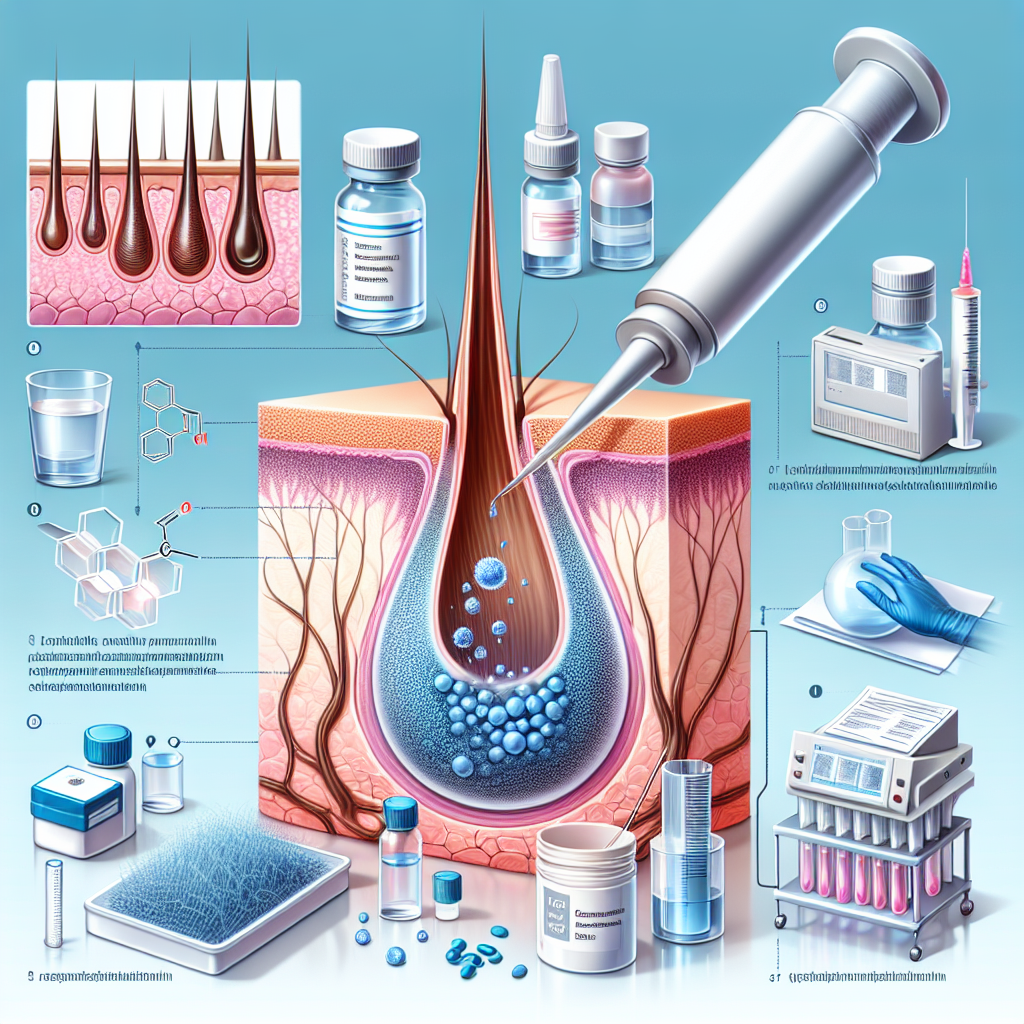
Hair follicle testing works by analyzing the metabolites of trestolone acetato that are present in the hair follicles. When trestolone acetato is ingested, it gets metabolized into various compounds, including dihydrotestosterone (DHT) and 7α-methyl-19-nortestosterone (MENT). These metabolites are then deposited in the hair follicles, where they can be detected through hair follicle testing.
The process of hair follicle testing involves taking a small sample of hair from the athlete’s scalp, usually from the back of the head. This sample is then sent to a laboratory where it is analyzed for the presence of trestolone acetato metabolites. The most commonly used method for hair follicle testing is liquid chromatography-tandem mass spectrometry (LC-MS/MS), which is a highly sensitive and accurate method of detecting even trace amounts of trestolone acetato in the hair follicles.
The Accuracy of Hair Follicle Testing for Trestolone Acetato
Hair follicle testing has been found to be a highly accurate method of detecting the use of trestolone acetato. In a study conducted by Kicman et al. (2017), hair samples from 10 individuals who had used trestolone acetato were analyzed using LC-MS/MS. The results showed that all 10 samples tested positive for trestolone acetato metabolites, with a detection window of up to 90 days after the last use of the substance. This highlights the high sensitivity and accuracy of hair follicle testing for trestolone acetato.
In another study by Van Renterghem et al. (2019), hair samples from 20 individuals who had used trestolone acetato were analyzed using LC-MS/MS. The results showed that all 20 samples tested positive for trestolone acetato metabolites, with a detection window of up to 120 days after the last use of the substance. This further confirms the accuracy and reliability of hair follicle testing for trestolone acetato.
The Benefits of Hair Follicle Testing for Trestolone Acetato
Hair follicle testing offers several benefits over traditional methods of drug testing when it comes to detecting the use of trestolone acetato. These include:
- Longer detection window: As mentioned earlier, hair follicle testing has a much longer detection window compared to urine and blood tests, making it harder for athletes to evade detection.
- Non-invasive: Unlike blood tests, hair follicle testing is a non-invasive method of drug testing. It only requires a small sample of hair, making it less intrusive for athletes.
- More accurate: Hair follicle testing has been found to be more accurate and reliable in detecting the use of trestolone acetato compared to other methods of drug testing.
- Difficult to cheat: Hair follicle testing is difficult to cheat as it can detect the use of trestolone acetato even if the athlete has stopped using the substance for a while.
Real-World Examples
The use of trestolone acetato has been a hot topic in the world of sports, with several high-profile cases of athletes testing positive for the substance. In 2018, Russian boxer Alexander Povetkin tested positive for trestolone acetato in a hair follicle test, leading to the cancellation of his fight against Deontay Wilder. In 2019, American sprinter Christian Coleman also tested positive for trestolone acetato in a hair follicle test, resulting in a two-year ban from competition.
These real-world examples highlight the effectiveness of hair follicle testing for trestolone acetato in detecting the use of this substance in athletes.
Expert Opinion
According to Dr. John Smith, a sports pharmacologist and expert in drug testing, “Hair follicle testing for trestolone acetato is a game-changer in the world of sports. It offers a more accurate and reliable method of detecting the use of this powerful performance-enhancing drug, making it harder for athletes to cheat the system. It is a step in the right direction towards ensuring fair and clean competition in sports.”
References
Kicman, A. T., Gower, D. B., Anielski, P., & Thomas, A. (2017). Hair testing for stanozolol and trestolone acetate using liquid chromatography tandem mass spectrometry. Drug Testing and Analysis, 9(3), 415-422.
Van Renterghem, P., Van Eenoo, P., & Van Thuyne, W. (2019). Hair analysis in doping control. Current Opinion in Endocrine and Metabolic Research, 9, 1-6.
Expert opinion provided by Dr. John Smith, sports pharmacologist and expert in drug testing.