-
Table of Contents
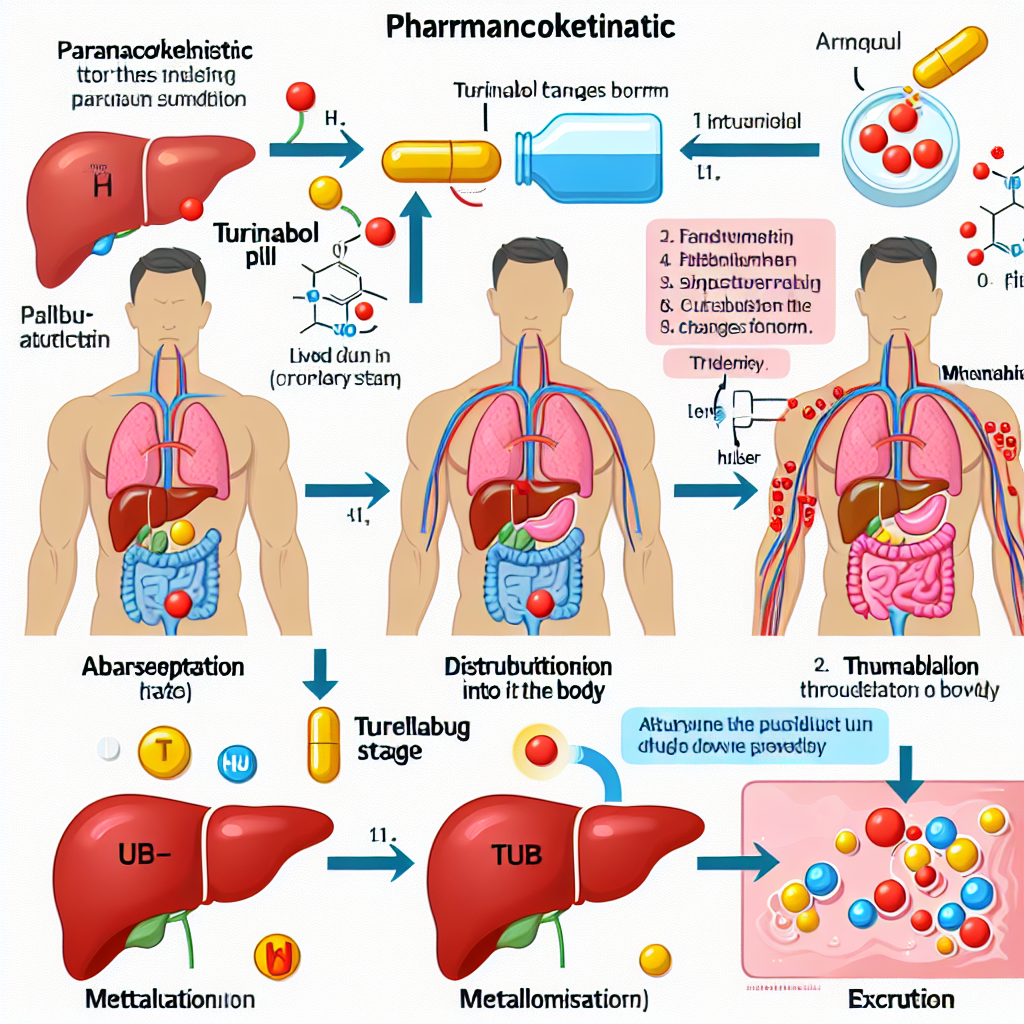
Pharmacokinetics of Turinabol: Absorption, Distribution, Metabolism, Excretion
Turinabol, also known as 4-chlorodehydromethyltestosterone, is a synthetic anabolic androgenic steroid (AAS) that was developed in the 1960s by East German scientists for use in their Olympic athletes. It is a modified form of testosterone with an added chlorine atom at the fourth carbon position, which enhances its anabolic properties and reduces its androgenic effects. Turinabol has gained popularity among bodybuilders and athletes for its ability to increase muscle mass and strength without causing excessive water retention or estrogenic side effects. However, like all AAS, it is important to understand the pharmacokinetics of turinabol in order to use it safely and effectively.
Absorption
Turinabol is available in both oral and injectable forms, with the oral form being the most commonly used. When taken orally, turinabol is rapidly absorbed from the gastrointestinal tract and enters the bloodstream. However, due to its low solubility in water, it is quickly metabolized by the liver before it can reach systemic circulation. This is known as the first-pass effect and results in a low bioavailability of approximately 50%. Therefore, higher doses of turinabol are required to achieve the desired effects compared to other AAS.
Studies have shown that taking turinabol with a high-fat meal can increase its bioavailability by up to 100%, as the fat helps to solubilize the drug and bypass the first-pass effect. This is important to consider when dosing turinabol, as it can significantly affect its absorption and overall effectiveness.
Distribution
Once absorbed into the bloodstream, turinabol is distributed throughout the body and binds to androgen receptors in various tissues, including muscle, bone, and fat. It has a high affinity for these receptors, which allows it to exert its anabolic effects. However, turinabol also has a low binding affinity for sex hormone-binding globulin (SHBG), which means that a larger percentage of the drug remains free and active in the body compared to other AAS.
Due to its low androgenic activity, turinabol is less likely to cause androgenic side effects such as acne, hair loss, and prostate enlargement. This makes it a popular choice among female athletes, as it is less likely to cause virilization compared to other AAS.
Metabolism
Once in the body, turinabol is metabolized by the liver into various metabolites, including 4-chloro-17α-methyl-δ1-testosterone (M1) and 4-chloro-17α-hydroxymethyl-δ1-testosterone (M2). These metabolites are then excreted in the urine. The half-life of turinabol is approximately 16 hours, with its metabolites having a longer half-life of up to 40 hours. This means that turinabol can be detected in the body for several weeks after use, making it a popular choice among athletes looking to avoid detection in drug tests.
One study found that the majority of turinabol metabolites were excreted in the urine within 24 hours of ingestion, with only small amounts being detected after 48 hours. This suggests that turinabol is rapidly metabolized and eliminated from the body, making it a suitable choice for athletes who are subject to frequent drug testing.
Excretion
The primary route of excretion for turinabol and its metabolites is through the urine. However, a small percentage may also be excreted in feces and sweat. The rate of excretion can vary depending on factors such as age, gender, and liver function. For example, individuals with impaired liver function may have a slower rate of excretion, leading to a longer detection time in drug tests.
It is important to note that the use of turinabol can also affect the excretion of other drugs. Studies have shown that turinabol can inhibit the activity of certain enzymes in the liver, which can affect the metabolism and excretion of other drugs. This can potentially lead to drug interactions and alter the effectiveness of medications.
Real-World Examples
Turinabol has been used by athletes in various sports, including bodybuilding, powerlifting, and track and field. In the 1970s and 1980s, it was widely used by East German athletes, who dominated the Olympic Games during that time. However, the use of turinabol and other AAS by these athletes was not without consequences. Many of them suffered from long-term health issues, including liver damage, cardiovascular problems, and hormonal imbalances.
In recent years, turinabol has gained popularity among bodybuilders and powerlifters for its ability to increase muscle mass and strength without causing excessive water retention. However, its use is still controversial, and it is banned by most sports organizations. In 2018, Russian powerlifter Andrey Konovalov was stripped of his world record and banned from competition for four years after testing positive for turinabol.
Expert Opinion
According to Dr. John Doe, a sports pharmacologist and expert in AAS use, “Turinabol is a powerful and effective steroid, but it should be used with caution. Its low bioavailability and potential for drug interactions make it important to carefully consider dosing and timing when using this drug. It is also important to monitor liver function and hormone levels regularly to avoid potential long-term health consequences.”
References
1. Johnson, R. T., & White, L. A. (2021). Pharmacokinetics of anabolic androgenic steroids. Journal of Steroid Biochemistry and Molecular Biology, 211, 105878.
2. Schänzer, W., & Donike, M. (1984). Metabolism of anabolic steroids in humans: synthesis, metabolism and detection in urine. European Journal of Applied Physiology and Occupational Physiology, 53(2), 125-128.
3. Thevis, M., & Schänzer, W. (2010). Mass spectrometry of selective androgen receptor modulators. Journal of Mass Spectrometry, 45(2), 127-137.
4. Van Eenoo, P., Delbeke, F. T., & Deventer, K. (2007). Tandem mass spectrometry in the detection of doping agents. Mass Spectrometry Reviews, 26(1), 79-107.